
◈ Past Participles


Intermediate Grammar Project

PAST PARTICIPLES

What is a past participle?

Past participle is a type of verb that describes an event that has occurred in the past.


RULES

◈ They can’t be the only verb in a sentence, so they need another verb like "have".

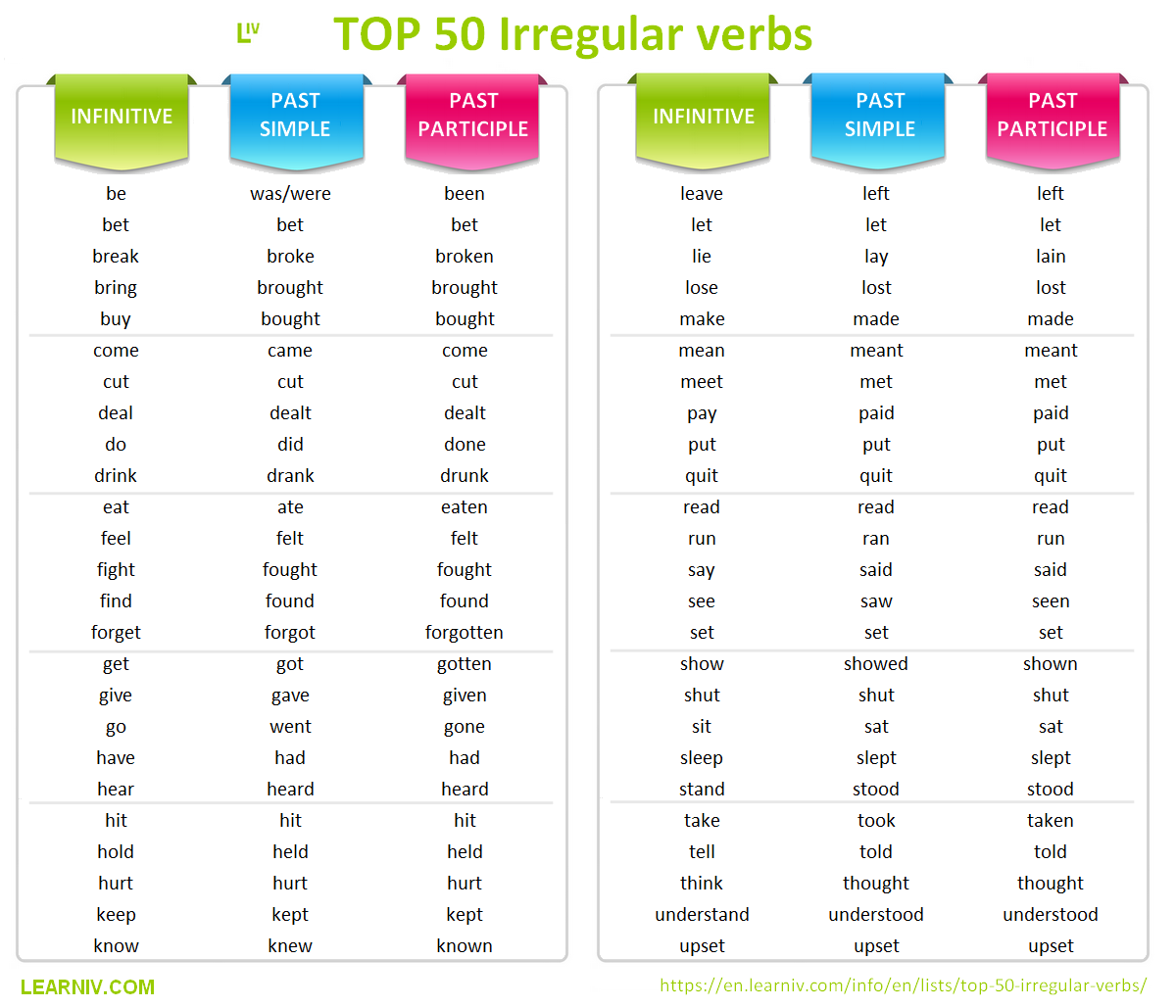
◈ There are regular and irregular verbs. For regular, we can add -ed at the end of the verb. For irregular, we have a list.

USES

◈ It is used in present perfect following the auxiliary verb "have".

◈ It is used in past perfect following the auxiliary verb "had".

◈ Also, it can be used before a noun as an adjective.

EXAMPLES

◈ They have found a class for their dance practice.

◈ Sheila had paid $100 for her wedding dress. So cheap!

◈ Dani, Yuli and Sandy are interested in the new summer collection.
◈ I should have finished my homework early. Now, I can't go to the mall!

REFERENCES
GIF's images are provided from: https://giphy.com/ 

Comments

Popular posts from this blog

◈ Present Perfect Tense

  Intermediate Grammar Project PRESENT PERFECT TENSE What is the Present Perfect? It is a verb tense that is generally used to describe an action that began in the past and continues in the present. It needs the auxiliary verb “have” in the present and a past participle. REMEMBER! We use have for: I, you, they, we We use has for: He, she, it

◈ Comparatives & Superlatives

  Intermediate Grammar Project COMPARATIVES & SUPERLATIVES COMPARATIVES Comparative adjectives are used to compare differences between TWO objects. STRUCTURE Subject (noun) + verb + comparative + than + object (noun) FORMATION OF COMPARATIVES (regular) To irregular adjectives, there is a list where you can consult. Example: Little -> Less Bad -> worse EXAMPLES ◈ Mac reads faster than Amy. ◈ Gina says the blue skirt is more expensive than the black skirt.

◈ Participle Adjectives

  Intermediate Grammar Project PARTICIPLE ADJECTIVES What is participle adjectives? Some participles can be used as adjectives. To express how someone feels, the past participle is usually used, BUT to refer to the person, thing or situation that causes that feeling, the present participle is used. Past participle verbs ending in -ed Present participle verbs ending in -ing   Some examples: Past participle: confused, exhausted, tired Present participle: confusing, exhausting, tiring  Below, you can see a list with more examples: SENTENCES Physical education class is tiring. I want it to be over quickly! I'm too tired to go for the physical education class. Having a week's worth of work piled up is frustrating . He is frustrated because he has work pending.